
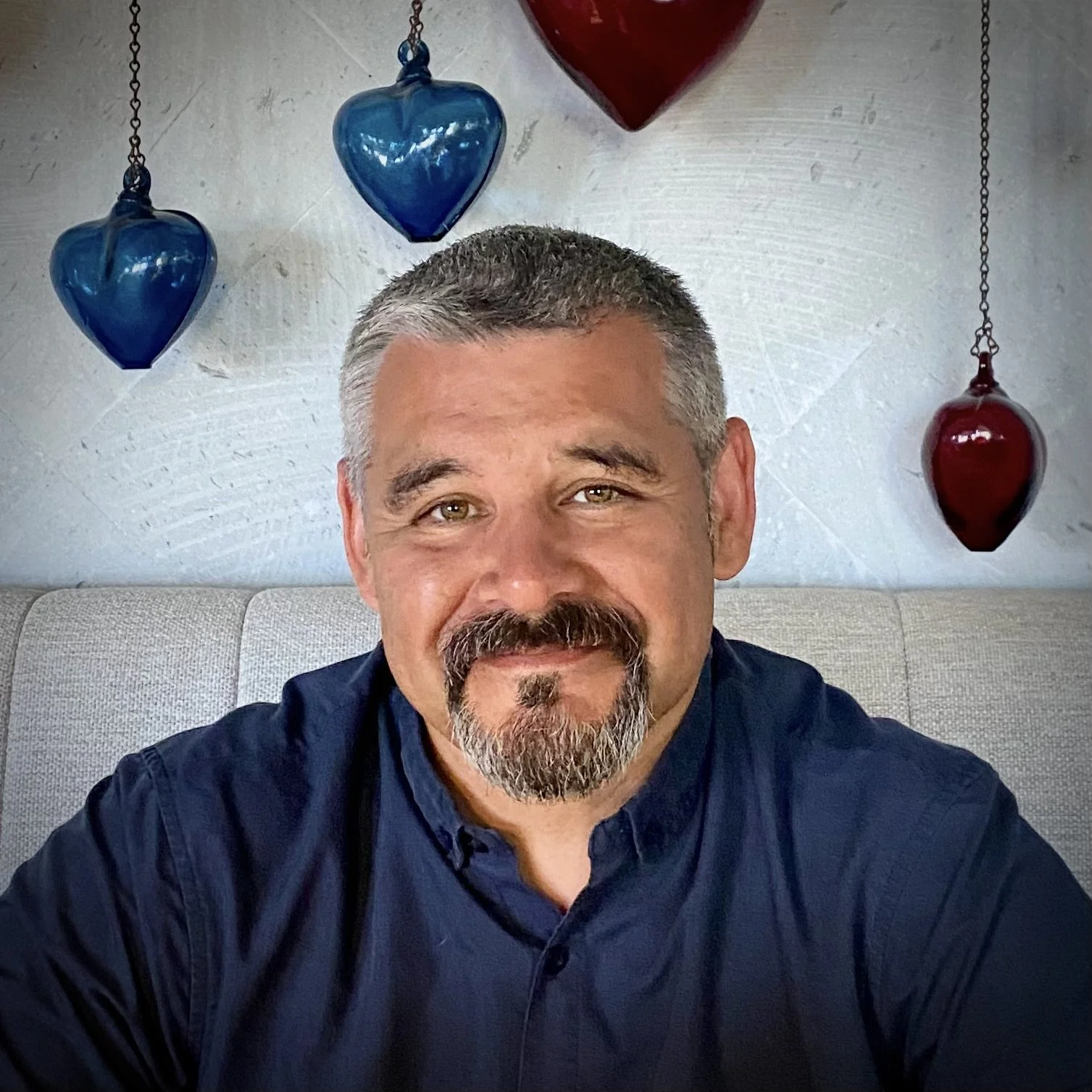
I’ve spent my career studying what happens when human beings try to do difficult things together.
I’m Vincent Perez, MPA, a coach, facilitator, educator, and organizational-development consultant.
For more than twenty-five years, I’ve worked in places where the human stakes are real: schools, youth programs, juvenile justice settings, public agencies, nonprofits, community organizations, leadership teams, and organizations navigating change.
The questions
What helps people flourish?
What happens to us under pressure?
What allows people to trust one another?
What restores dignity when relationships or systems cause harm?
What conditions allow people to do meaningful work together?
Dignity as practice
Dignity is something people experience.
Across my work, dignity has become a practical question rather than an abstract value: What do people experience in everyday decisions, relationships, policies, access, communication, and care?
Dignity Compass™ grew from that inquiry.
Career arc
A practice shaped by many rooms.
My earliest professional training was in photography, and it still shapes how I work: pay attention to context, framing, relationship, and what is easy to miss.
My career moved through experiential education, bilingual youth leadership, juvenile justice, school and equity work, organizational development, facilitation, coaching, and community practice.
That range taught me not to assume that every hard situation is an individual problem, a relationship problem, or a systems problem. Often it is some combination. My work is to help people see more clearly where the challenge lives and what kind of response is actually useful.
Education and professional grounding
My formal education crosses visual storytelling, the humanities, and public leadership: an AAS in Photographic Communications from Northwest College, a bachelor’s degree from the University of Idaho, and a Master of Public Administration from The Evergreen State College.
Each has shaped how I work. Photography taught me to pay attention to context, perspective, relationship, and what may be happening just outside the frame. Experiential education taught me how to witness, ask engaging questions, and listen. Public administration strengthened my understanding of institutions, policy, leadership, and the systems that shape people’s everyday lives.
Over more than twenty-five years, I’ve brought those ways of seeing into leadership development, organizational change, speaking engagements, facilitation, education, youth development, public systems, and community-based work. My practice has been formed as much by classrooms, boardrooms, community circles, and juvenile justice settings as it has by formal study.
A broader body of work
My service with men, boys, young people, and communities continues through separate initiatives and community-based projects. Those experiences deepen how I understand accountability, belonging, identity, relationship, and human development. A few include the Equity Institute, La Cima Bilingual Leadership, Men’s Healing Network, and the Cascadia Men’s Alliance.
What are you trying to figure out right now?
If something important is happening in your leadership, team, or organization, start there.
CASE STUDIES
Real situations. Work built around what was needed.
The work looks different depending on where the challenge lives—within leaders, between people, or across an organization.
Education Service District
Leading through uncertainty with clarity and care
The situation
As immigration-related uncertainty intensified, leaders and staff across the ESD were supporting undocumented students and families while navigating rapidly changing information, heightened fear, and questions about how the organization should respond.
The work
Through Project Dignity & Belonging, I worked alongside staff and leaders to develop practical response protocols, bilingual communication tools, listening circles, resource systems, and leadership practices grounded in dignity, resilience, and care.
What changed
Department leaders reported a clearer chain of command and faster mobilization during immigration-related concerns. Staff described a shift from a compliance mindset toward one centered more intentionally on care, empathy, and proactive outreach. The work continued into a new phase of Lead Within leadership coaching, extending the focus from organizational response to the people carrying the responsibility.
County Advisory Committee
Making room for repair when a team could no longer move forward as usual
The situation
After months of increasingly difficult conversations involving race, power, harm, and relationships, the advisory committee reached a point where regular business was paused. County leadership brought in outside facilitation to help restore communication and determine how the group could move forward.
The work
Our facilitated process created structure for people to slow down, name what had happened, acknowledge harm, clarify what repair might require, and examine the conditions needed for the group to work together again. The sessions incorporated values, agreements, somatic awareness, reflection, structured dialogue, and attention to both dignity and accountability.
What changed
The group was able to move the conflict out of avoidance and into a facilitated process where harm, repair, safety, and future working relationships could be discussed directly. Rather than treating the conflict as a disagreement to simply get past, the work created a path for continued dialogue and a second facilitated session.
Regional Library System
Turning dignity from a value into something an organization could examine and practice
The situation
The Regional Library's Employee Experience team wanted a clearer way to connect organizational values with what staff and patrons actually experience. That work became even more important as the library system entered a period of significant financial pressure, leadership uncertainty, and anticipated layoffs.
The work
Using the Dignity Compass™, I worked with the Employee Experience team to examine dignity across organizational systems, leadership practices, frontline service, and everyday relationships. Together, we developed and refined a rubric with clear indicators addressing staff experience, patron service, communication, accountability, restorative practice, accessibility, belonging, and leadership alignment.
The process combined organizational assessment with Appreciative Inquiry, restorative dialogue, emotional-literacy practices, circle work, and facilitated reflection.
What changed
The team left with a practical framework for discussing culture without reducing it to blame or abstraction. Participant reflections showed that people overwhelmingly felt heard, respected, and meaningfully engaged. During a period of substantial organizational instability, the work also helped the team reconnect with where they still had agency and influence—and with the everyday practices through which dignity and culture are actually created.
Podcasts
What is the purpose of public education?
A podcast series on the purpose of public education with Vincent Perez and the Equity Institute.
The Men’s Healing Network Podcast is a space where men sit together with intention, speak honestly, and share the moments that have shaped who they are.